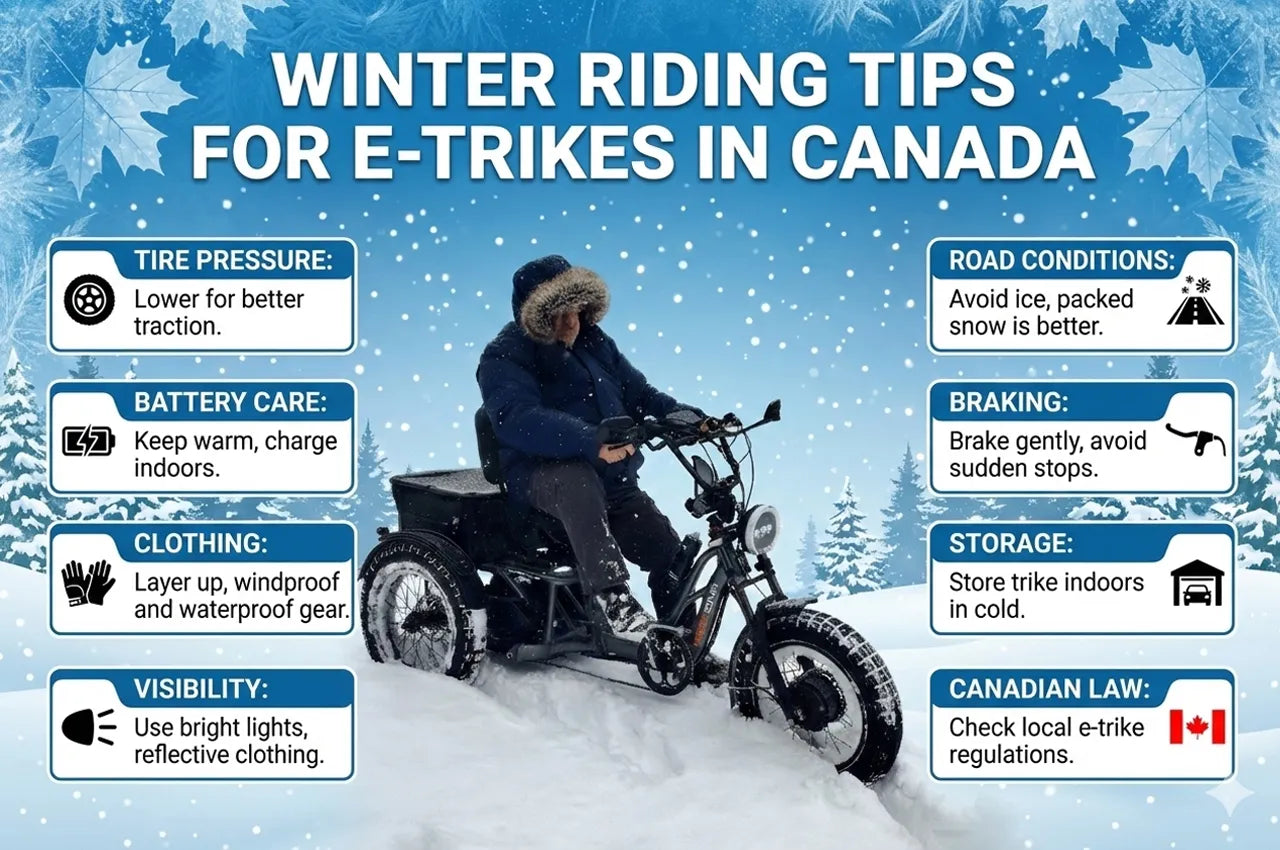
Canadian winters are long, cold, and unpredictable—but that doesn’t mean your riding season has to stop. With the right setup, smooth riding habits, and a well-built electric trike, winter cycling can be not only safe, but surprisingly enjoyable.
This guide is built from real cold-weather riding experiences across Canada and other northern regions. Below, you’ll find clear, practical techniques for riding an electric trike in snow and ice, followed by an explanation of why modern fat-tire e-trikes are especially well suited for winter conditions.
Let’s start with the short answer most riders want:
Yes—electric trikes can be ridden safely in winter.
Keep the battery warm, accelerate gently, rely more on rear braking, avoid deep snow, and dress for windchill. Do that, and winter riding becomes stable, predictable, and far less intimidating than most people expect.
Key Winter Riding Techniques for E-Trikes
1. Smooth Starts Matter More Than Power
Snow and cold reduce traction, so control always beats strength.
Best practice:
- Begin with light throttle input for the first few seconds
- Transition to pedal assist only after the trike feels settled
- Avoid sudden pedal pressure on packed or icy snow
Many winter riders find throttle starts smoother than pedal starts because torque delivery is more consistent. With fat tires, controlled launches work well even on 5–10 cm of snow.
2. Maintain a Consistent, Moderate Speed
Winter riding isn’t about speed—it’s about consistency.
Observed riding range during winter testing:
Approximately 24–27 km/h (15–17 mph)
Why this range works:
- Stable handling without excessive braking distance
- Less risk of the front wheel digging into snow
- Reduced battery drain in cold temperatures
- Enough speed to maintain balance on mixed surfaces
This is based on real-world riding feedback rather than a prescribed speed, and actual conditions should always dictate riding pace.
3. Corner Slowly and Let the Trike Do the Work
Most winter falls happen during turns.
Winter cornering tips:
- Reduce speed before entering the turn
- Keep throttle neutral through the corner
- Stay upright—trikes don’t lean like bikes
- Expect mild rear-wheel drift on ice
- Apply power only after the trike straightens out
Rear-drive trikes handle winter turns more predictably because the front wheel focuses only on steering.
4. Brake With the Rear Wheels First
This is the most important winter safety habit.
Why rear braking is safer:
- Keeps the trike tracking straight
- Reduces front-wheel washouts
- Prevents sideways rotation on descents
Avoid aggressive front braking on:
- Snowy downhill paths
- Icy intersections
- Slushy or frozen curves
Rule of thumb:
Winter braking = ~80% rear / ~20% front.
5. Respect Snow Depth Limits
Electric trikes handle moderate snow extremely well—but deep snow is another story.
Best conditions:
5–10 cm (2–4 inches)
This offers:
- Reliable traction
- Easy steering
- Minimal strain on motor and battery
High-risk conditions:
25–30 cm (10–12 inches)
At this depth:
- Snow can reach the motor
- Steering becomes unpredictable
- Battery drains rapidly
- Motors can overheat
E-trikes are stable—but they’re not snowplows.
6. Prepare for Constant Surface Changes
Canadian winter routes rarely stay consistent.
Typical transitions include:
- Fresh snow → slush → ice → wet pavement
How to manage:
- Keep speed steady
- Brake early and gently
- Avoid sharp steering inputs
Fat tires and three-wheel stability make these transitions manageable as long as inputs stay smooth.
7. Dressing for Windchill, Not Just Temperature
Cold air isn’t the biggest problem—windchill is.
Effective winter gear includes:
- Thermal base layers
- Wind-blocking outer shell
- Insulated gloves or handlebar mitts
- Ski goggles for eye protection
- Balaclava or windproof face covering
In prairie provinces and northern regions, riders often use snowmobile-level protection once temperatures drop below –18°C (0°F).
8. Battery Management in Cold Weather
Lithium batteries lose efficiency in low temperatures—this is normal chemistry.
Best practices:
- Store and charge the battery indoors
- Start rides with a warm battery
- Avoid leaving the trike outdoors for long periods
- Expect reduced range below –5°C
In extreme cold, some riders use low-power warming pads to maintain battery performance.
9. Extending Winter Riding Range
Cold weather increases rolling resistance and reduces battery output.
To maximize range:
- Maintain steady speeds
- Avoid hard acceleration
- Use pedal assist efficiently
- Keep tires properly inflated
- Warm the battery before riding
A 20–30% range reduction in winter is normal—even with fat tires.
10. Visibility Is Your Biggest Safety Factor
Experienced winter riders agree: cars—not ice—are the biggest risk.
In winter:
- Drivers don’t expect cyclists
- Snowbanks narrow roads
- Braking distances increase
- Visibility drops quickly
Safety essentials:
- Bright front and rear lights
- Reflective clothing or frame strips
- Extra caution at intersections
- Avoid traffic during snowstorms
Snowy bike paths are peaceful. Traffic lanes are not.
Why Electric Trikes Excel in Winter
Three-Wheel Stability
Unlike bicycles, trikes remain upright during minor slides and self-correct naturally, which dramatically reduces fall risk.
Rear-Wheel Drive Traction
Rear-drive systems perform better on snow because:
- More weight sits over the drive wheels
- Hill climbing is more consistent
- Wheel spin is reduced
- Steering remains predictable
Fat Tires for Snow Control
Wide tires create:
- Larger contact patches
- Better flotation on slush
- Reduced sink in soft snow
- Improved grip without studs
Longer Wheelbase Confidence
A longer wheelbase improves:
- Straight-line tracking
- Downhill control
- Stability on uneven winter surfaces
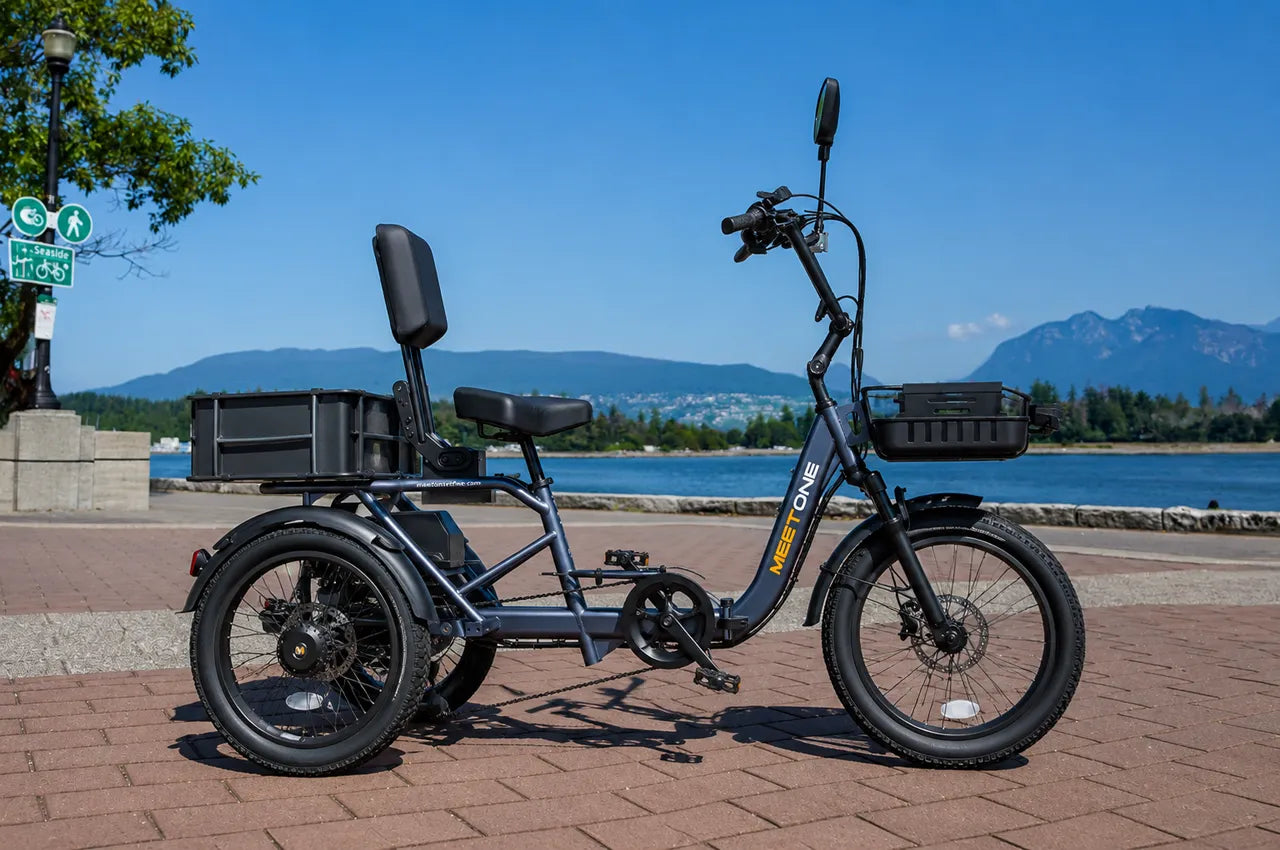
Real-World Winter Performance of Models Like the Meet One Breeze Pro

This isn’t marketing—it reflects what winter riders consistently report.
In Canadian winter conditions, well-designed fat-tire e-trikes typically deliver:
- Stable starts on packed snow
- Reliable traction in moderate snowfall
- Predictable braking with minimal drift
- Confident hill climbing with rear-wheel drive
- Comfortable control on slush and wet pavement
- Cold-weather reliability with proper battery care
These results come from physics and design—not hype.
Final Thoughts: Winter Riding Doesn’t Have to Stop
With proper technique, realistic snow limits, smart battery care, and the right clothing, winter riding on an electric trike is not only possible—it’s enjoyable.
For many riders, winter becomes their favorite season: quiet trails, fresh snow, and a level of stability that two-wheel bikes simply can’t match.
Snow doesn’t end the riding season.
It just changes how you ride.
Master the techniques, and winter becomes one more reason to enjoy your e-trike.
Share:
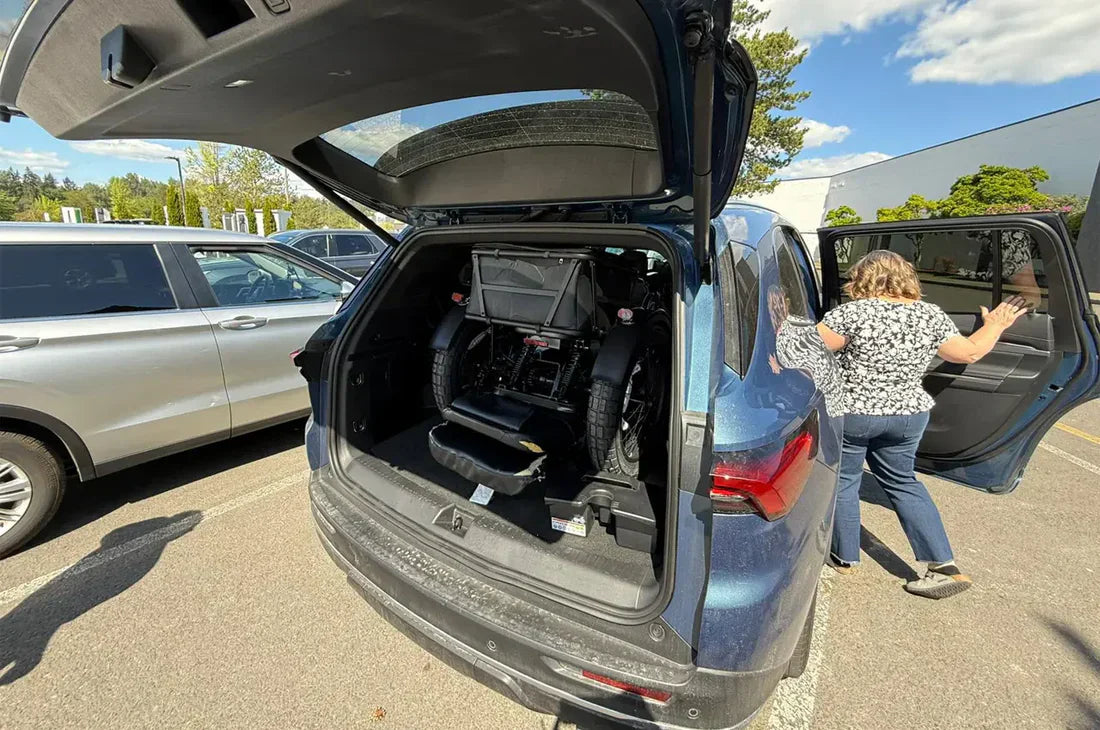
How to Transport a Trike When Travelling: Practical Tips That Actually Work
Introducing the Meet One Breeze Pro 2.0 — More Capable, More Confident